Flipped-Classroom Learning
Six online modules establish a common knowledge foundation before the onsite programme.
21–25 September 2026
Main Preceptorship Programme: 21–24 September 2026
National University Hospital, Singapore
Dear Colleagues and Fellow IBD Enthusiasts,
A very warm welcome to the 2026 NUH-IBD Preceptorship Programme.
This year marks an exciting evolution in our programme. For the first time, we have introduced six structured online pre-workshop learning modules — covering everything from The Diagnostic Toolkit and IBD Mimics, to Pharmacology, the STRIDE-II Treat-to-Target Framework, and Safety & Monitoring — designed to equip you with a strong common foundation before you arrive. This shift to a flipped-classroom model is deliberate: by grounding ourselves in the fundamentals ahead of time, we free our four days together for what truly matters — rich, peer-driven case discussion, clinical reasoning, and the kind of learning that only happens in the room.
Over the next four days here at NUH, you can look forward to an immersive and carefully curated programme. We begin with the Diagnostic Dilemma — navigating infection, IBD, and mimics — before moving through histology and radiology workshops with live review of slides and scans. We tackle the full management landscape: from designing Top-Down and Step-Up treatment plans, to Acute Severe Ulcerative Colitis, Complex Crohn's and Perianal Disease, Biologic Sequencing, and Special Situations including Pregnancy and Extra-intestinal Manifestations. We close with a Final Grand Round on ICI Colitis and difficult grey-area decisions, and a Paediatric-to-Adult Transition session — reflecting the true breadth of IBD in clinical practice.
Beyond the formal sessions, I would warmly encourage you to make the most of our Participant Case Sharing on Wednesday, our Combined Specialist Clinic, and the NUH IBD Centre Tour. These are the moments where collegial relationships are forged and practical insights are exchanged — and in my experience, they are often the most memorable parts of a preceptorship.
The IBD landscape continues to evolve at remarkable pace — new biologics, small molecules, treat-to-target strategies, and a growing appreciation of the whole patient. This programme is designed not merely to update your knowledge, but to sharpen your clinical thinking and connect you with a community of peers who share your commitment to excellence in IBD care.
I sincerely hope you will engage fully, ask the difficult questions, share your own cases and experiences, and take the conversations beyond the lecture hall. The learning here is collective — and the quality of it depends on every one of you.
Thank you for making the journey to Singapore. I look forward to four stimulating days together.
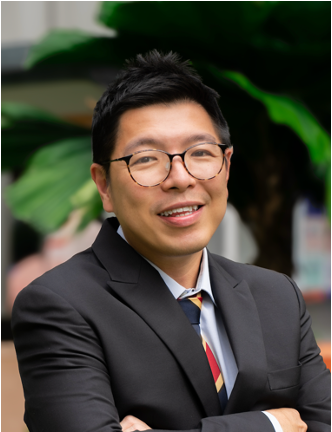
Programme Director, 2026 NUH-IBD Preceptorship
National University Centre of Digestive Health
National University Hospital, Singapore
As the incident rates of inflammatory bowel disease (IBD) sharply increase in Asia 1–2, it becomes imperative that treatment goals evolve to retard disease progression, reduce morbidity, and minimize its cost burden. Reflecting the increased disease incidence in Asia as well as newer therapies prolonging survival, we are now faced with the phenomenon of ‘compound prevalence’3, where IBD is poised to become a significant burden on healthcare resource utilization4. Therefore, it becomes an urgent need in our region to ensure that IBD patients are optimally treated during the mild-moderate disease phase for prolonged disease remission and prevention of early progression to moderate-severe disease — a stage which is often associated with prohibitive costs5–6.
Therefore, management of IBD must shift beyond symptomatic control, moving towards a treat-to-target (T2T) approach7 for achieving deep mucosal remission at the early disease stage. Treatment advances have made deep remission a realistic target for some patients with IBD, with a focus on objective parameters such as endoscopic, histological, and biochemical remission7. However, achieving deep remission in IBD within our local healthcare settings comes with several challenges unique to Asia. Yet, it is an aspiration that remains significantly important to improve the long-term prognosis of our IBD patients.
NUH-IBD Preceptorship Program is to create a vibrant learning space for SEA IBD experts to understand/update current thinking, challenges in clinical practice, dilemmas in clinical decision making, and educational needs of IBD doctors, through an innovative and structured method of quality medical engagement.
Six online modules establish a common knowledge foundation before the onsite programme.
Interactive discussions on diagnostic dilemmas, histology and radiology.
Case-based learning on advanced therapies, severe colitis, and complex Crohn's disease.
Opportunities for clinicians to present challenging cases and exchange perspectives.
Combined specialist clinic sessions and an NUH IBD Centre tour.
Collaborative learning and engagement with regional IBD colleagues.
Six structured online modules were introduced in 2026 through the Z-waka learning platform.
| Module | Title | Key Learning Objectives |
|---|---|---|
| M1 | The Diagnostic Toolkit | Biomarker interpretation (Calprotectin thresholds), CT/MRI/IUS basics, and the Montreal classification. |
| M2 | IBD Mimics | Red flags for infection (CMV, TB), ischaemic colitis, and distinguishing IBS from IBD. |
| M3 | Pharmacology I: The Classics | 5-ASAs, thiopurines (TPMT/NUDT15 testing), and steroids-sparing strategies. |
| M4 | Pharmacology II: Advanced Biologics | Mechanisms and dosing for Anti-TNFs, Anti-IL 12/23, and Anti-integrins. JAK inhibitors and S1P modulators (Safety profiles and screening). |
| M5 | The STRIDE-II Framework | Understanding "treat-to-target," mucosal healing vs. sympotomatic relief. |
| M6 | Safety & Monitoring | Vaccination protocols, skin cancer screening, and opportunistic infection prevention. |
21–24 September 2026
Venue: NUH Advanced Surgery Training Centre (ASTC), National University Hospital, Singapore
Four days of interactive lectures, multidisciplinary discussions, clinical exposure and case-based learning.
| TIME | 21 SEP 2026 MONDAY | 22 SEP 2026 TUESDAY | 23 SEP 2026 WEDNESDAY | 24 SEP 2026 THURSDAY |
|---|---|---|---|---|
| 09:00–09:15 | REGISTRATION & COFFEE | |||
| 09:15–10:00 | Welcome and Introduction Jonathan Lee | Advanced Therapies in IBD Elaine Lo | IBD Diets Courtney Chong | Reproductive Health, Pregnancy, Lactation in IBD Bernice Tan |
| 10:00–10:45 | ASUC Zhang Tianjiao | Positioning of IBD Therapies Jonathan Lee | Infective Complications and Preventive Health in IBD Dennis Poon | IBD Paeds James Huang |
| 10:45–11:00 | RESTROOM BREAK | |||
| 11:00–11:45 | Perioperative Care of IBD Patients Tan Shi Ni | Histology in IBD Jeffery Lum, Gwyneth Soon | Radiology Case Discussions Amanda Joanne, Pang Shu Kuan | Basics of IUS John Mok |
| 11:45–12:30 | Surgery in IBD Ian Tan | Histology Case Discussion Pang Shu Kuan | IBD MDM Round Pang Shu Kuan | Certificate Presentation, Closing Remarks & Feedback Jonathan Lee |
| 12:30–13:30 | LUNCH | Graduation Lunch @ ASTC | ||
| 13:30–14:15 | Making Diagnosis of IBD Juanda Leo | NUH Hospital Tour | Group Case Presentations II | |
| 14:15–15:00 | Conventional Therapies in IBD Juanda Leo | Endoscopy in IBD Bernice Tan | CLINIC | |
| 15:00–15:15 | TEA BREAK | |||
| 15:15–16:00 | Radiology in IBD Teo Yi Ming | Extra-intestinal Manifestations in IBD John Mok | ||
| 16:00–16:45 | Group Case Presentations I | Group Case Presentations II | ||
| 16:45–17:00 | QUIZ | QUIZ | ||
| 18:30–20:30 | WELCOME DINNER @ 7 PM Venue: Marriott Tang Plaza Hotel | |||
Programme schedule based on the official 2026 NUH-IBD Preceptorship Course Schedule. All times are Singapore Time (SGT).
24–25 September 2026
Venue: NUS Shaw Foundation Alumni House
An additional speaker development programme, "Presenting with Impact", was included in the 2026 event booklet.
Information on entry requirements, passports and visas for Singapore.
Singapore ICA ↗Information about public transport and travelling within Singapore.
Land Transport Authority ↗Two-way airport transfers were provided by Ferring for programme participants, including arrival pick-up and return transportation.
Participants were advised to look out for a driver holding a card displaying their name.
7 Science Park Drive, Singapore 119316
Check-in: 14:00
Check-out: 12:00
Complimentary daily breakfast and Wi-Fi were included under the programme arrangements.
View Map ↗Singapore Marriott Tang Plaza Hotel
320 Orchard Road, Singapore 238865
21 September 2026
19:00–20:30 SGT
Shuttle departure from Citadines Science Park: 18:30.
View Map ↗The 2026 programme brought together participants from healthcare institutions across Southeast Asia.
| Country | Name | Hospital / Institution |
|---|